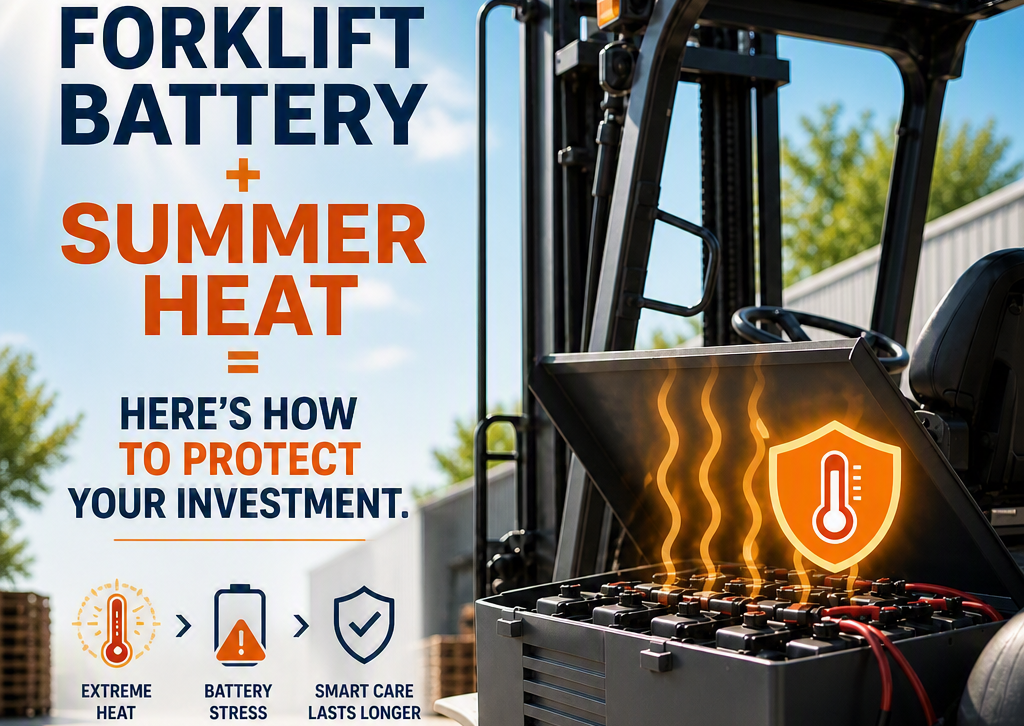
Forklift Battery + Summer Heat = Here’s How to Protect Your Investment
When summer temperatures climb, most of us think about staying cool and drinking more water. But there’s another thing that could use a little extra attention this time of year: your electric forklift battery. Hot weather can be tough on lead-acid batteries. Higher temperatures cause water to evaporate more quickly, and if batteries aren’t maintained…
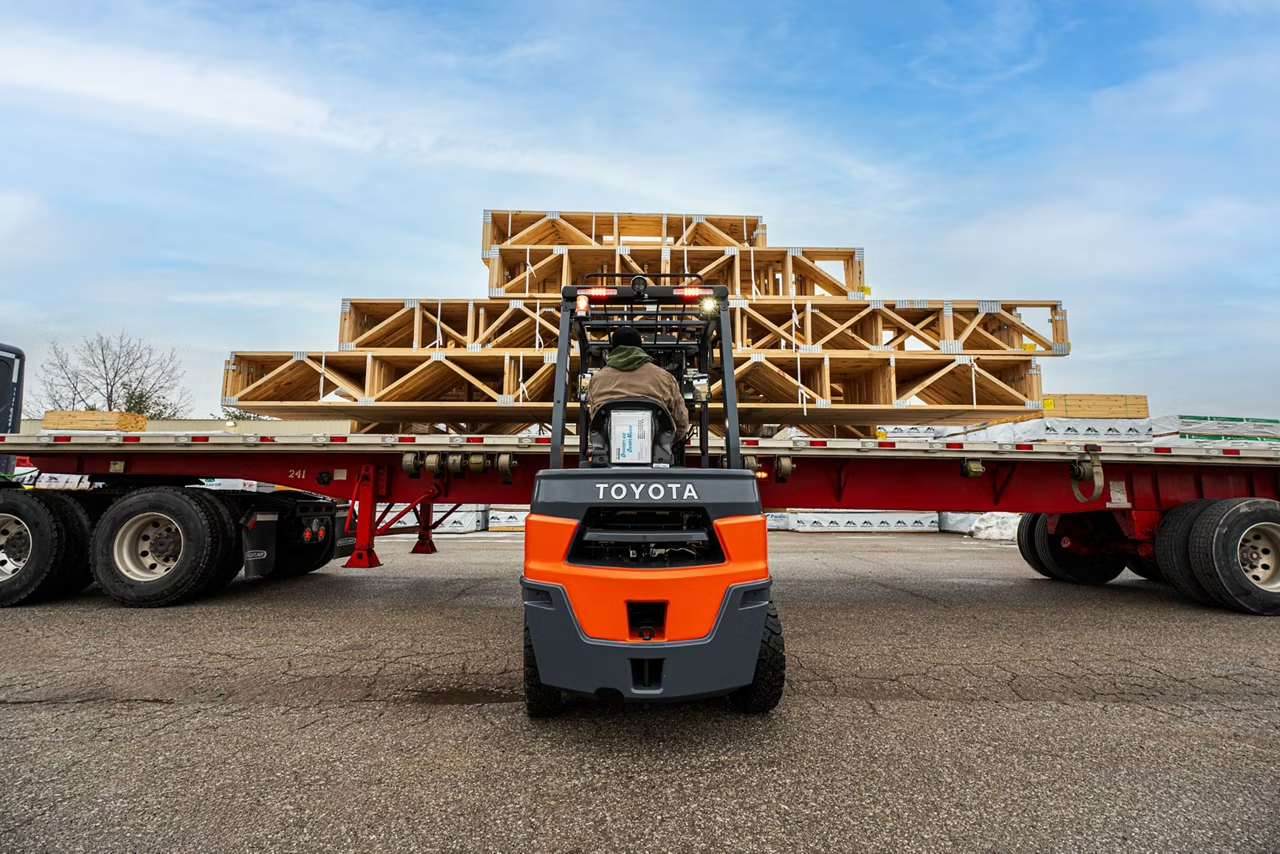
Toyota Core Diesel Pneumatic Forklift: Power in Demanding Environments
Credit: Toyota Material Handling Blog – Published March 17, 2026 When it comes to working in lumber yards, sawmills, and brick and pipe manufacturing, the search for consistent power and performance never slows down. Operating in these environments demands equipment capable of handling uneven terrain and heavy loads, all while keeping up with continuous operational…
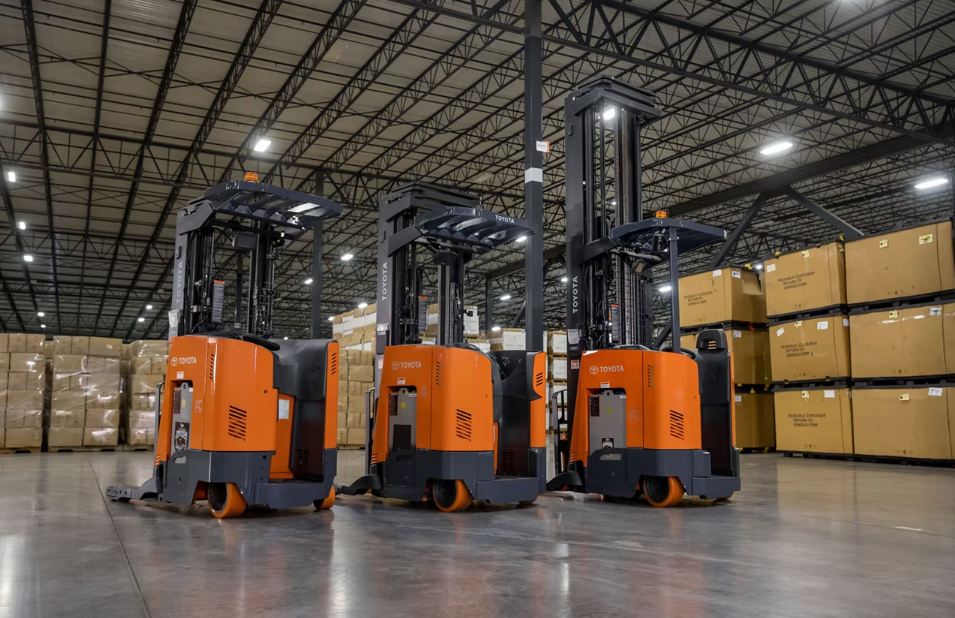
Credit: Toyota Material Handling Blog – Published January 27, 2026 Common Electric Reach Truck Questions What is An Electric Reach Truck and How Is It Different Than a Typical Forklift? Electric reach trucks are designed for narrow-aisle warehouses where operators need to lift loads to higher rack levels while maintaining a small turning radius. What…
If you repair or operate an order picker or aerial lift, it’s important to remember to check not only your vehicle you are going to use before you use it, but the harness that may save your life.
Pedestrians are involved in about 40% of all forklift accidents. There are many reasons for this, but one is – we have told pedestrians most of their lives that they have the right of way!
One of the most important assets to your company is your group of dedicated employees and as the employer your goal is to reduce the risk of injury of your employees.
“Good Communication, quality product each time – Thanks!”
John D.
“Maintenance/service person is very helpful & informative”
Edward G.
“Outstanding attention to detail – great partnership!”
David F.
“Very good service – kept down time to a minimum.”
Tom R.
“Your service technicians are outstanding. They go all out for Universal.”
Tom E.
The Tech Joe Borrelli is very professional and responsive. Service is top notch!!
Daniel P.
“Great keeping me informed of replacement unit. Much Appreciated!”
Elaine R.
“Techs are great to work with and do a great job”
Matthew H.
“Service well done as always.”
Randy N.
“Your service guys are always prompt and efficient when called.”
Bill H.
“Always enjoy working with T&J”
Jim B.
“Tim Gaughan and Dave Bennett were very helpful demonstrating the scrubber on their two visits.”
Tom B.
The Tech Joe Borrelli is very professional and responsive.
Daniel P.
“Great job! Charlie goes out of his way to make sure our repairs are done correctly.”
Jim D.
“Quality Service & Equipment”
Brian M.
“T&J are great; Paul Janac is a great mechanic.”
Curt L.
“Good service, nice and friendly staff.”
Ingo H.
“Excellent service. Thanks!”
Kelly S.
“Steering direction needed to be changed. Handled immediately. Excellent follow up!”
Chris C.
“T&J is an excellent business partner.”
Jim B.
“Walt & Doug from Elmira are exceptional.”
Tyler P.
“Very prompt on service calls. We can always rely on Chris to get any issues we have fixed quickly”
Joe M.
“Thanks, you guys were great.”
Annette S.
“Great service & salesmen”
Don N.
The Tech Joe Borrelli is very professional and responsive.
Daniel P.
“Great service. When we have a machine go down they always go out of their way and try to take [care] of us and get us repaired ASAP. Wish more businesses were like your T&J people. Thanks.”
John R.
The Tech Joe Borrelli is very professional and responsive.
Daniel P.
“It was great to meet Steve the Service Mgr., very helpful & knowledgeable.”
Dana S.
“Outstanding job by John!!”
Angelo C.
“John and your company did an excellent job.”
Ed B.
“Very prompt attention from John Snyder & our onsite service folks.”
Ryan D.
The Tech Joe Borrelli is very professional and responsive.
Daniel P.
“Service & Sales has always been excellent.”
Randy M.
“We love the new lift, and appreciate your people and your service.”
Daryl R.
“Equipment looked good! Will be back for more!”
Ryan A.
“Had a few minor problems with set up but Sales Rep. took care of it.”
Allen B.
“Paul the service technician is fantastic and Tim is great to work with!”
Doug F.
“Mike Brown was helpful in the selection of equipment.”
Dave A.
“Great service! Thank you! You have been prompt in getting our repairs in and returning in a timely manner.”